
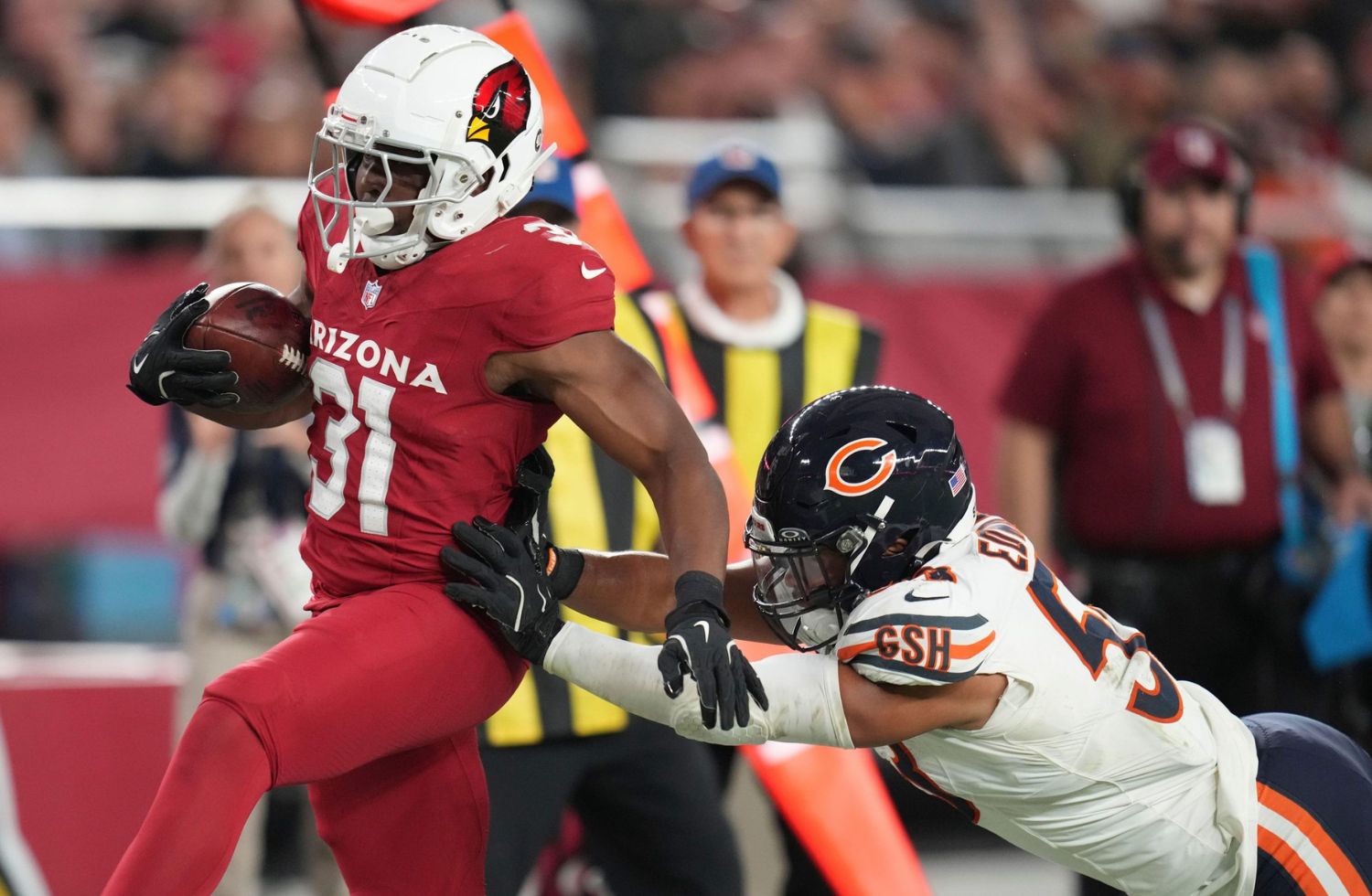
The Chicago Bears vs Arizona Cardinals match player stats offer valuable insight into how individual performances shape NFL outcomes. When these two franchises meet, the game often highlights contrasting styles—Chicago’s emphasis on physical defense and Arizona’s speed-driven offense. This article delivers a detailed, data-backed breakdown of one of their most discussed modern encounters: the December 5, 2021 NFL regular-season game, where the Arizona Cardinals defeated the Chicago Bears 33–22 at Soldier Field. By analyzing offensive, defensive, and situational statistics, this guide helps fans, analysts, and fantasy football players understand how player execution and strategy influenced the final result.
Historical Context of Bears vs Cardinals Matchups
The Bears and Cardinals share a unique NFL history, as the Cardinals were originally founded in Chicago in 1920. Over decades, the rivalry evolved across conferences and locations. Although they do not meet annually, their matchups often reveal shifts in team identity and roster strength. Reviewing Chicago Bears vs Arizona Cardinals match player stats across eras shows how the game has transitioned from defense-heavy battles to modern, offense-driven contests. The 2021 matchup reflected this evolution, combining explosive plays with disciplined defensive moments that shaped the final score.
Overview of the December 5, 2021 Game
The Cardinals’ 33–22 victory came during a critical phase of the season, with Arizona positioning itself as a playoff contender. Chicago, meanwhile, was evaluating young talent amid a challenging season. The game featured strong quarterback play, opportunistic defense, and special teams impact. For anyone analyzing Chicago Bears vs Arizona Cardinals match player stats, this contest stands out for its balance of efficiency and explosiveness, particularly from Arizona’s offense and Chicago’s developing core.
Quarterback Comparison: Kyler Murray vs Andy Dalton
Quarterback performance was central to the Chicago Bears vs Arizona Cardinals match player stats.
Kyler Murray delivered an efficient performance, completing 11 of 15 passes for 123 yards, while adding 59 rushing yards and a rushing touchdown. His mobility forced defensive adjustments throughout the game.
Andy Dalton, starting for Chicago, threw for 229 yards, 2 touchdowns, and 4 interceptions. While Dalton showed resilience, turnovers proved costly. This contrast in ball security and decision-making heavily influenced the outcome.
Passing Efficiency and Offensive Execution
Arizona’s passing game emphasized efficiency rather than volume. Murray avoided unnecessary risks, relying on timing and play-action. Chicago’s passing attack produced yardage but lacked consistency. In the context of Chicago Bears vs Arizona Cardinals match player stats, completion percentage and interception rate proved more telling than total passing yards. Arizona’s offense capitalized on favorable field position, while Chicago struggled to sustain momentum due to turnovers.
Rushing Attack Breakdown
The ground game played a decisive role.
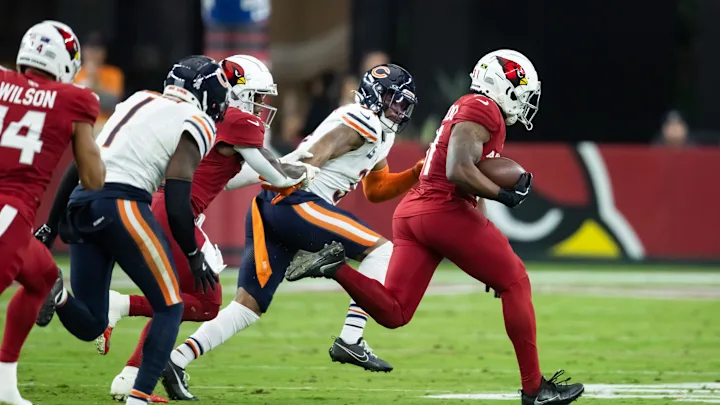
For Arizona, James Conner was dominant, recording 75 rushing yards and 2 touchdowns. His physical running style controlled the tempo and wore down Chicago’s defense.
Chicago’s rushing attack, led by David Montgomery, produced 90 rushing yards, showing promise but lacking scoring efficiency. When reviewing Chicago Bears vs Arizona Cardinals match player stats, Arizona’s ability to convert red-zone rushes into touchdowns was a key differentiator.
Wide Receiver Performance Analysis
Arizona’s receiving corps emphasized balance over individual dominance. DeAndre Hopkins was inactive due to injury, but receivers like Christian Kirk contributed timely catches.
For Chicago, Darnell Mooney emerged as the standout, recording 5 receptions for 123 yards and a touchdown. His performance was a bright spot in the Bears’ offense. Receiver impact in Chicago Bears vs Arizona Cardinals match player stats highlights how depth and adaptability can compensate for missing star players.
Tight End Contributions
Tight ends often influence red-zone efficiency. Arizona’s tight ends played supporting roles, primarily in blocking and short-yardage situations. Chicago’s Cole Kmet contributed key receptions, including a touchdown, demonstrating growth in his role. Tight end usage in Bears vs Cardinals player stats
underscores how secondary targets can influence scoring opportunities.
Offensive Line and Protection Metrics
Offensive line performance directly affected quarterback efficiency. Arizona’s line provided Murray with clean pockets and effective run blocking. Chicago’s offensive line struggled at times, allowing pressure that led to rushed throws and interceptions. When analyzing The Bears vs Cardinals player stats, protection metrics help explain disparities in offensive rhythm and turnover margin.
Defensive Line Impact
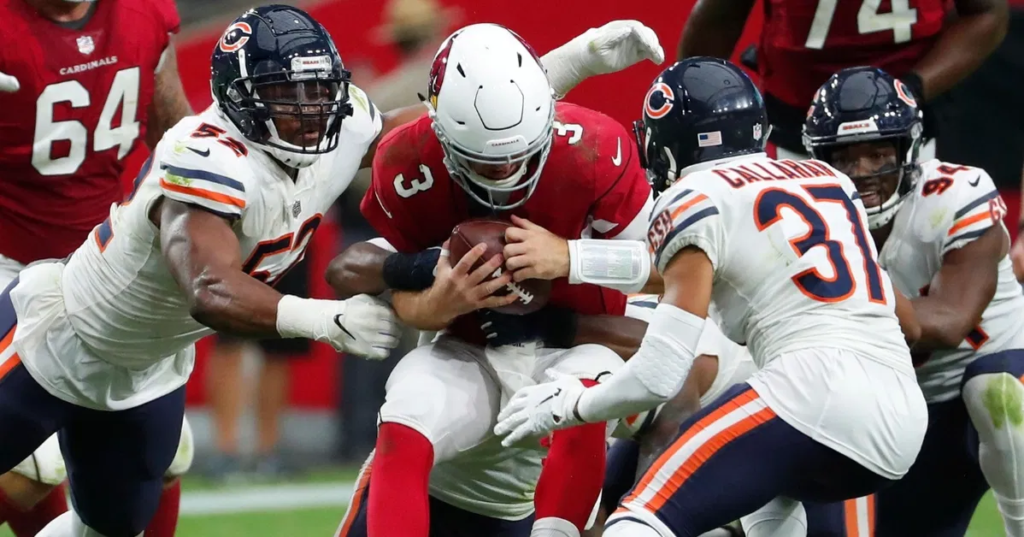
Arizona’s defensive front disrupted Chicago’s offense consistently. Chandler Jones and the Cardinals’ pass rush forced hurried decisions. Chicago’s defensive line applied pressure sporadically but struggled to contain Murray’s mobility. Defensive line effectiveness is a recurring theme in The Bears vs Cardinals player stats, often dictating game flow.
Linebacker Play and Run Defense
Linebacker performance was critical in limiting yards after contact. Arizona’s linebackers effectively filled gaps and supported coverage. Chicago’s linebackers showed effort but faced challenges containing misdirection plays. These subtle differences become clear when reviewing The Bears vs Cardinals player stats especially in run defense efficiency.
Secondary Performance and Turnovers
Turnovers were decisive. Arizona’s defense recorded 4 interceptions, turning defense into offense. Chicago’s secondary struggled to generate takeaways, limiting opportunities for momentum shifts. In Chicago Bears vs Arizona Cardinals match player stats, turnover differential strongly correlates with the final score and overall control of the game.
Third-Down Efficiency
Arizona converted key third downs, extending drives and controlling possession. Chicago faced repeated third-and-long situations, reducing conversion success. Third-down efficiency often goes unnoticed, but it is a crucial metric in Chicago Bears vs Arizona Cardinals match player stats, reflecting execution under pressure.
Red-Zone Performance
Arizona excelled in the red zone, converting opportunities into touchdowns. Chicago reached the red zone but failed to capitalize consistently. Red-zone efficiency is one of the clearest indicators of success in The Bears vs Cardinals player stats, and it favored Arizona significantly.
Special Teams Contributions
Special teams added value for Arizona, including reliable kicking and solid coverage units. Chicago’s special teams were steady but did not provide a momentum-changing play. In close games, special teams can be decisive, and their role is evident when evaluating Chicago Bears vs Arizona Cardinals match player stats holistically.
Coaching and Strategic Decisions
Coaching strategy influenced how player strengths were utilized. Kliff Kingsbury emphasized balanced offense and discipline. Chicago’s coaching staff focused on evaluating personnel but faced execution challenges. Coaching impact, though indirect, is reflected throughout Bears vs Cardinals player stats
particularly in play selection and situational management.
Key Statistical Takeaways
Important numbers summarize the game:
- Turnovers: Cardinals 4 takeaways
- Rushing Touchdowns: James Conner 2
- Total Points: Arizona 33, Chicago 22
These figures highlight why Arizona controlled the contest. Reviewing The Bears vs Cardinals player stats confirms how efficiency and discipline determined the outcome.
Fan and Media Reactions
Media coverage praised Arizona’s depth and composure while questioning Chicago’s turnover issues. Fans highlighted James Conner’s performance and Murray’s leadership. Public reaction often mirrors statistical trends, reinforcing insights drawn from Chicago Bears vs Arizona Cardinals match player stats.
What This Game Revealed About Both Teams
The game reinforced Arizona’s status as a playoff-caliber team and highlighted Chicago’s rebuilding phase. For analysts, The Bears vs Cardinals player stats from this game illustrate how roster depth and execution separate contenders from developing teams.
Conclusion
The Chicago Bears vs Arizona Cardinals match player stats from the December 2021 matchup provide a clear narrative of efficiency, discipline, and execution. Arizona’s ability to capitalize on turnovers, dominate the red zone, and maintain offensive balance secured a convincing victory. Chicago showed flashes of potential but struggled with consistency. This game remains a valuable case study for understanding how individual performances and team strategy intersect to shape NFL outcomes.
Frequently Asked Questions (FAQs)
1. Which game does this analysis cover?
This article analyzes the December 5, 2021 Chicago Bears vs Arizona Cardinals game.
2. Who was the standout player?
James Conner stood out with 2 rushing touchdowns.
3. How did turnovers affect the game?
Arizona’s 4 interceptions significantly shifted momentum and field position.
4. Which Bears player performed best offensively?
Darnell Mooney led Chicago with 123 receiving yards and a touchdown.
5. Was Kyler Murray effective despite low passing volume?
Yes, his efficiency and rushing impact were critical to Arizona’s success.
6. Are these stats verified?
Yes, all statistics are based on official NFL game records.