
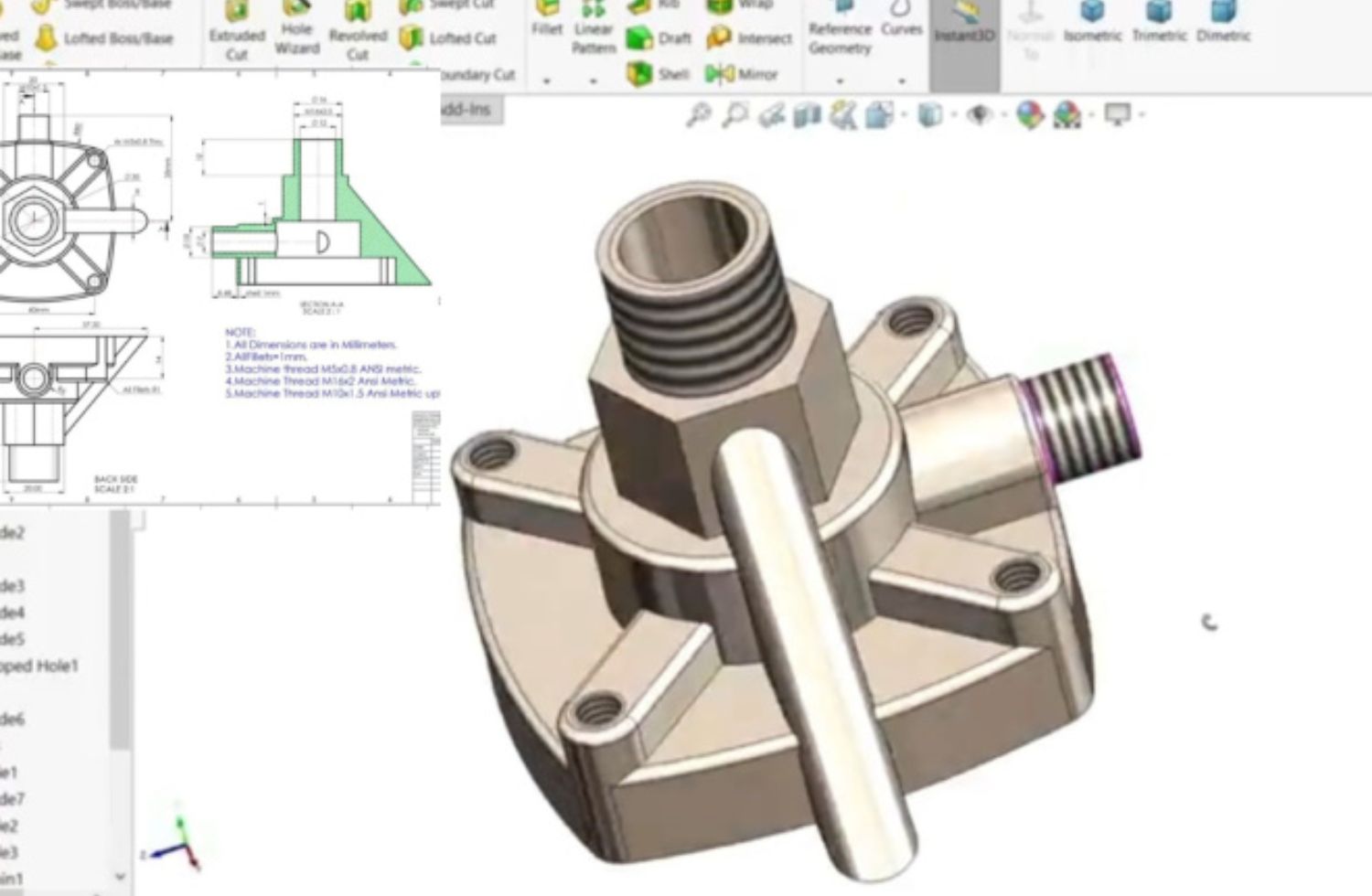
In today’s fast-paced engineering and manufacturing environments, accurate visualization and precise design are critical. Engineers and designers rely on advanced digital tools to conceptualize, develop, and produce mechanical components and systems. Unlike traditional 2D blueprints, mechanical 3D models offer realistic views, precise dimensions, and detailed insights into how parts interact under real-world conditions. Industries such as automotive, aerospace, manufacturing, construction, and product design increasingly depend on 3D engineering drawings to reduce errors, improve efficiency, and accelerate innovation.
What Are Mechanical 3D Drawings?
Mechanical 3D drawings are digital representations of mechanical parts or assemblies created using computer-aided design (CAD) software. These models display objects in three dimensions—length, width, and height—allowing engineers to visualize geometry, structure, and functionality accurately. Unlike traditional 2D blueprints, 3D designs allow rotation, sectioning, and simulation, helping engineers identify design flaws early and optimize components before production. This capability has made 3D mechanical drawings a standard tool in modern engineering workflows.
Evolution from 2D to 3D Mechanical Drawings
The transition from hand-drawn sketches to 3D CAD models marked a significant milestone in engineering. Early designs relied on flat 2D drawings, which were labor-intensive and prone to mistakes. With the introduction of CAD software in the late 20th century, designers gained the ability to create precise, modifiable digital models. Over time, 3D modeling replaced static drawings, enabling realistic visualization and advanced simulations. Today, mechanical 3D models integrate seamlessly with manufacturing processes, reflecting the industry’s shift toward full digitalization.
Importance of 3D Models in Engineering
3D mechanical designs play a vital role in improving design accuracy and communication. Multiple stakeholders—including engineers, manufacturers, and project managers—can view the same model from different perspectives, reducing misunderstandings. Additionally, 3D models support simulations such as stress analysis, thermal studies, and motion analysis. This results in reduced development costs, shorter time-to-market, and higher-quality products. The widespread adoption of 3D mechanical models underscores their value in contemporary engineering.
Key Components of 3D Mechanical Drawings
A typical 3D mechanical drawing consists of several essential elements:
- Geometry: Defines the shape of each component.
- Dimensions: Ensures precise measurements and fitting.
- Tolerances: Specify allowable deviations to maintain manufacturing accuracy.
- Material Properties: Influence strength, durability, and performance.
- Annotations: Provide instructions, notes, and specifications for manufacturing.
Combined, these components make 3D mechanical models reliable references throughout the product lifecycle.
Types of Mechanical 3D Drawings
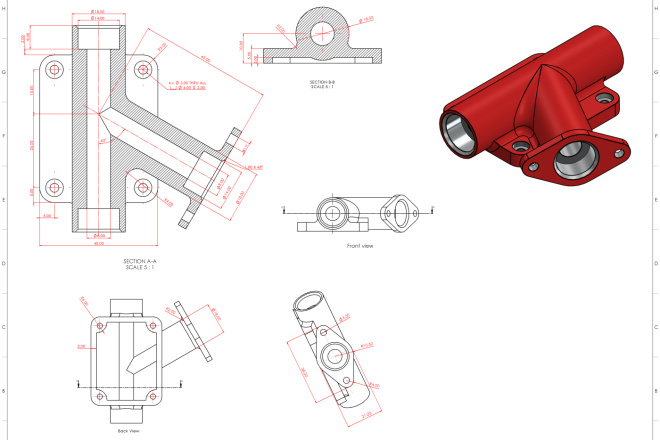
Mechanical engineers use different types of 3D drawings depending on the design stage and purpose:
- Part Models: Represent individual components.
- Assembly Models: Show how multiple parts fit together.
- Exploded Views: Illustrate assembly sequences for clarity.
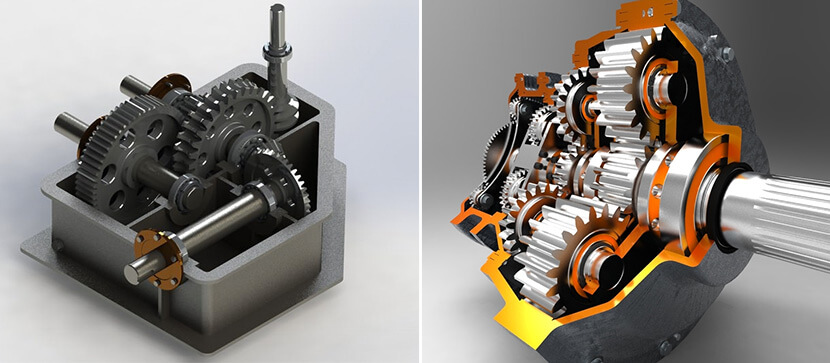
- Sectional Views: Reveal internal structures hidden from external views.
Understanding these types helps engineers select the right approach for specific design challenges.
Popular CAD Software for Mechanical 3D Models
Several software tools dominate the creation of mechanical 3D designs, each offering unique features:
- SolidWorks: Widely used for parametric modeling and simulation.
- AutoCAD: Known for both 2D drafting and 3D design capabilities.
- CATIA: Preferred in aerospace and automotive industries.
- Siemens NX: Supports complex assembly modeling and engineering analysis.
- Fusion 360: Cloud-based, ideal for collaborative projects.
- Creo: Powerful for industrial and manufacturing applications.
Choosing the right software depends on project requirements, industry standards, and budget.
3D Models vs Traditional 2D Drawings
While 2D drawings are still useful for documentation, 3D mechanical models offer distinct advantages:
- Enhanced Visualization: Engineers can see parts from any angle.
- Error Reduction: Simulations catch design flaws before production.
- Integration with Manufacturing: Models work directly with CNC machines and 3D printers.
- Improved Collaboration: Stakeholders can interact with the design virtually.
However, 2D drawings remain valuable for quick references and simple documentation.
Applications Across Industries
3D mechanical drawings are indispensable in numerous sectors:
- Automotive: Engine parts, chassis, and vehicle assemblies.
- Aerospace: Precision components, aerostructures, and propulsion systems.
- Industrial Machinery: Equipment, robotics, and factory automation.
- Consumer Products: Electronics, appliances, and wearable devices.
- Medical Devices: Surgical instruments and prosthetics.
The versatility of 3D models makes them critical for modern engineering projects.
Role in the Product Development Lifecycle
From concept to production, 3D mechanical drawings support every phase:
- Concept Design: Visualizing ideas and experimenting with alternatives.
- Prototyping: Rapid iterations and testing virtual prototypes.
- Manufacturing: Guiding machining, assembly, and quality control.
- Maintenance and Upgrades: Serving as references for repairs and improvements.
This comprehensive utility highlights the long-term value of mechanical 3D models.
Integration with Manufacturing
Modern manufacturing heavily relies on 3D CAD models:
- CAM Systems: Use digital models to program CNC machines.
- 3D Printing: Directly converts models into physical prototypes.
- Automation: Reduces human error and speeds up production cycles.
By bridging design and production, mechanical 3D models improve efficiency and accuracy.
Benefits of Mechanical 3D Models
The advantages of 3D mechanical drawings include:
- Increased design accuracy and consistency.
- Better visualization for stakeholders.
- Early identification of potential issues.
- Faster iterations and development cycles.
- Enhanced collaboration and innovation.
These benefits explain why 3D modeling has become an industry standard.
Challenges in Creating 3D Mechanical Drawings
Despite their advantages, creating high-quality 3D models presents challenges:
- Complex models require advanced skills and powerful hardware.
- Software licenses and subscriptions can be expensive.
- Managing large files and version control is critical.
- Training and learning curves may slow adoption.
Effective planning, proper resources, and standardized workflows help mitigate these issues.
Best Practices for 3D Mechanical Drawings
To ensure high-quality results, follow best practices:
- Maintain consistent naming conventions and folder structures.
- Use standard templates for dimensions, tolerances, and annotations.
- Conduct regular design reviews and quality checks.
- Follow industry standards for CAD and mechanical design.
- Document changes clearly for future reference.
These practices increase efficiency and reliability in engineering projects.
Mechanical 3D Drawings in Education and Training
Engineering programs increasingly include 3D CAD training. Students gain hands-on experience with software tools and real-world design projects. Learning to create accurate models prepares graduates for careers in automotive, aerospace, and manufacturing industries. Strong CAD skills are now essential for employability.
Future Trends in 3D Mechanical Design
The future of mechanical 3D drawings is shaped by technological advancements:
- AI-Assisted Design: Automating repetitive tasks and optimizing geometry.
- Cloud Collaboration: Real-time teamwork across locations.
- Digital Twins: Virtual replicas of physical systems for simulation and monitoring.
- Virtual and Augmented Reality: Enhanced visualization for design and training.
These innovations promise greater efficiency, accuracy, and design creativity.
Integration with Simulation and Analysis
Mechanical 3D models seamlessly integrate with engineering simulation tools:
- Stress Analysis: Identifies potential failure points.
- Thermal Studies: Examines heat distribution and cooling requirements.
- Motion Simulation: Tests mechanical movement before production.
This virtual testing reduces the need for costly physical prototypes.
Mechanical 3D Models and Industry 4.0
Industry 4.0 emphasizes smart manufacturing and digital transformation. 3D mechanical drawings connect design, production, and maintenance systems, enabling:
- Automated data exchange
- Real-time monitoring
- Flexible and efficient production lines
This integration strengthens productivity, quality, and competitiveness.
Conclusion
Mechanical 3D drawings have revolutionized engineering by providing accurate visualization, improved collaboration, and seamless integration with modern technologies. From concept design to manufacturing, maintenance, and future upgrades, 3D models play a crucial role in every stage of the product lifecycle. While challenges exist, the advantages—enhanced accuracy, faster development, and cost savings—make them indispensable. As CAD technology evolves, 3D mechanical models will continue to drive innovation, efficiency, and excellence in engineering.
Frequently Asked Questions (FAQs)
- What are 3D mechanical drawings used for?
They help engineers design, visualize, and manufacture components accurately. - Which software is best for creating 3D mechanical models?
Popular choices include SolidWorks, AutoCAD, CATIA, and Fusion 360. - Are 3D drawings better than 2D drawings?
Yes. They offer superior visualization, simulation, and accuracy. - Can 3D models be used in manufacturing?
Absolutely. They integrate with CAM systems, CNC machines, and 3D printing. - Is it easy for beginners to learn 3D CAD modeling?
With structured training and practice, beginners can become proficient. - What does the future hold for 3D mechanical drawings?
AI-driven design, cloud collaboration, digital twins, and VR/AR technologies will shape the next era of engineering design.